Where am I?

I spent some time planning this evenings practice, we had what we considered to be a ‘big’ game and I wanted to be more prepared, more prepared than I was last weekend. I watched what game tape I could get my hands on, I analysed statistics as a means of gaining some indication of ‘who they were’ and I built up a mental image of what we needed to do. Having arrived at practice early, I walked the Rock Road, agreed where we had gone wrong and put the whole thing behind me.

The start to practice was a self-organising one, I allowed the players to determine the tempo, intensity and direction of our play, in short, I said and did nothing. I waited and I watched. A total of eight minutes passed before the players were all fully engaged in the moment, they had reconstructed one of our warm up activities, it was our fast break action (rebound, outlet, run to ‘strongside’ and play), simple, but we owned it and we did it well. I called them in to discuss where it was that we were at. Having spoken to a parent I was made aware that we had achieved our three goals (remain competitive, finish in the top three and hold teams to 65 points). The question now (with seven games to go and a slim chance of winning it all) was what did we want to do next?

The players gave me their answer and I followed it up with another questions, what does it look like? In short, they had reset their direction, they wanted more and that was fine by me. However, they had to own that ‘want’, they had to do the necessary in order to put themselves in a position to achieve their new goal. We would have to work harder, we would have to focus more, commit to each other, to strengthen our team resolve and ultimately, we were going to have to be our very best in each moment of practice. The players nodded in agreement, I wasn’t sure they knew what it was they had committed to, what it was they had said they wanted.

Monday night practice meant we shared our learning space with our second U16 squad, and it appeared, like us, that tonight they had achieved full attendance. The sports hall was packed, the atmosphere was chaotic and I quickly became frustrated with our approach. It wasn’t championship like, it wasn’t refocused and repurposed, it wasn’t close to our best. By the end of the session I felt as though we had gone the wrong way, we didn’t execute, we didn’t demonstrate an ability to move the ball effectively and we didn’t show that we were basketball mature, in other words, we did’t look as though we could overcome the top two teams.

My parting message to the players was simple, ask yourself if you gave each other everything, did we contribute to the collective, and if not, where can we improve? I asked the players to respond on our WhatsApp group, to reflect on the session and to share their thoughts with each other. It is two-days post practice and as yet I have only received two reflections. I will not however prompt them or remind them, our growth and our ability to achieve our new goal will rest on their maturity, on an emergent leader that is willing to hold them to account. We often speak of ‘teachable’ moments, this is a ‘learning’ moment, a chance for social learning to emerge, for somebody to take charge of our new goal.

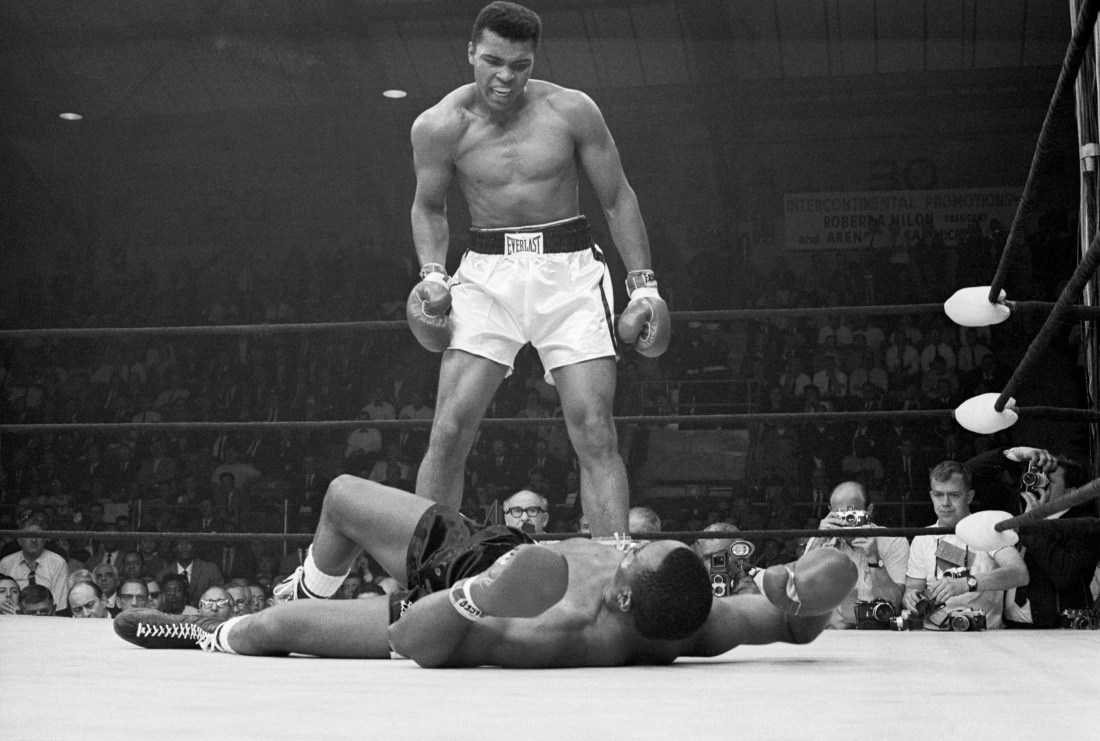
Having reflected on my practice, I can say with all honesty that I am not overly impressed with my contribution to Monday’s session. I didn’t question enough, I wasn’t as present as I wanted to be, although I am not sure why. I think I feel a little like Sonny, I know I want to get up, to be better, to create a real learning environment where the players lead and direct. I wish to see them interact, share ideas and then execute at a high ‘click’, yet here I lay, looking up as it were, trying to regain consciousness of my practice and return to my feet ready to continue the development fight.

Just not here…

The period of time between game one and two served as a compass to the landscape I had neglected! In short, through various communications, I had been made aware of the affect of my practice on a player. I had showed a lack of trust in their ability, in the contribution they could have potentially given to our collective performance and in doing so they had chosen to abstain from our second fixture. My immediate thoughts were concern for the player, the concept of ‘TEAM’ over ‘I”, a lack of communication and my role in addressing the situation. I sought council from the Director of the club, my wife and my students. Interestingly, the general consensus was one of a mixed intervention, one that would address the feelings and actions associated with the incident.
The management of time, player time on the court is a reoccurring issue and one that I would suggest is a point of consideration for many coaches. There is no reason to think that it would be a central issue within youth sport, after all, everybody wants to play. There are a number of positions on the subject, notably, a first and second five, very much a statement of ability and imply a hierarchy. A ‘short bench’, in other words a 7 or 8 man rotation, suggesting that only so many players are competent, and a fixed rotation system with dedicated minutes and points at which the player enters the game. Much of this is in direct contrast to the theory that underpins youth development and to some extent, to my own thinking with regards to court time. I had stated quite clearly that I would commit to a minimum of ten minutes per game per player and in my mind, I have worked to achieve this, and have done so in most games. I begin my rotations at 2-minutes, moving the guards and the bigs in small circular formations as a means of maintaining our competitiveness. It doesn’t always work, but generally speaking, I am able to work down and back up our roster, getting everybody in to the game in the first half. Unfortunately, the system falls short in the second half as I suffer from wanting to end the game early. Added to this is the complication of having lots of guards and only three ‘bigs’, which means the rotation ends up being ‘short’, or that I have to play some players in the 4-spot, a position they do not particularly want to play and which does not bring out their very best.
Anyway, we played our second fixture of the weekend, it was very much a roller coaster performance, having gotten off to one of our very best starts, running downhill at a pace, moving the ball and ourselves exceptionally well and finishing at the basket, we then made the dramatic climb up hill! In short, we struggled to get into anything that was us. We allowed the opposition to come roaring back into the game, gaining momentum and the lead. This being said, I was determined that I wasn’t going to lose it with them, I knew we had enough to win the game and we just needed to find it within ourselves. To this end, I tried, as best as I could, to control the expressiveness of my emotions, to not appear frustrated, and more importantly to smile, all very difficult for me when we are not at our best. The players once more demonstrated their ability to fight through difficulty, to overcome the pressure and scrap around for their authentic identity, that is running, pressuring the ball and running again.
We eventually won the game and I made my way home. We had moved up the league table but our fabric had been torn, I had missed the signs and we now had a fracture in our chemistry. I didn’t particularly like the feeling, the actions and expressions that had led to where we were but it was something I was going to have to deal with. The bigger picture brought me back to a mathematical problem, how do I rotate 17/12/40? If it was that we were a pure performance environment I could just allow the players the chance to earn their spots. Certainly, other quarters of the club see the rotations to be performance based and often question the ‘length’ of my player movement during games. The task was a difficult one, one that I did not have an immediate and definitive answer for, but one that belonged to me.

The Rock Road to somewhere

Another double header weekend against two tough opponents, well coached, varying degrees of talent and not to be taken lightly. To say that I felt under prepared would be to minimise my disappointment in my preparation. I had missed our last practice due to a flare up following a course of treatment that my body did not agree with! It was also a baby sitting weekend and so my plate was full.
The drive south wasn’t too bad, just short of an hour and I was there. Access to the court was slow, the previous game had ran over somewhat so we had to wait. As usual, I spent some of my time meeting and greeting, speaking with parents on various issues loosely associated to the game, the team and the year, as well as their son’s performance. On this particular occasion I had spent a considerable amount of time talking to the referees. I knew them both and respected their professionalism and approach to their role in the development of young basketball athletes. In fact, I knew it was going to be a well officiated game.
Within minutes of the ball leaving the referee’s hand we were down 6-0. The opposition had clearly made it their focus to attack us early and apply pressure , something that we had difficulty dealing with early on. However, at that very moment I made a conscious decision not to call a time out, but rather to allow the players to play their way through the onslaught. My trigger is normally a +-8 and we weren’t quite there. The players fought their way through the pressure with a great amount of poise and togetherness, I was very pleased with them. It was however to be a close game throughout, one that would require our very best.
When rotating players I try to maintain a balance, both in ability, confidence and overall play. I try to assess the +- affect of making a substitution and hope to maintain a relatively equal standing. This being said, it is not always the case, some players’ acclimatise differently to the various pressures. I had made a number of rotations, based on previous experience of individuals coming in at certain points. Our opposition were somewhat bigger and stronger and played to both of these advantages. We quickly lost our momentum, turning the ball over and giving up 8 quick points. I couldn’t wait to see if we had the strength to get through this and pulled three players’ in a sudden and sharp rotation. I wasn’t overly happy with the move but it was the right one. Where I failed was to communicate my actions to the players, to inform them what it was I was feeling and why I had made the move.
The remainder of the game was tight, very much a back and forth affair until very late. Our opposition had shown themselves to be a worthy combatant and we had risen to the challenge. In fact, at times, we executed at a high ‘click’, demonstrating our ability to really move in sync and get what it was we were looking for from our different plays. I was happy, happy with the confidence and fight the players had displayed, happy with the level of communication that was emanating from the bench and the court. I felt as though it was a good day.
On the drive home I attempted to recall some of the last forty minutes or so, I saw good ball movement, great player movement, high levels of communication and a great deal of togetherness. Unfortunately for me, I wasn’t looking at the full picture, I hadn’t taken the time to survey the entire landscape!

Purpose and intent

The drive over was packed full of thought and imagination, I had watched the SuperBowl, an annual ritual that never fails to leave me stunned at the glitz and glamor of it all. This, alongside a weekend of games that resulted in some very interesting successes and I was somewhat at odds with my practice. I know, I am sounding like a scratched record (vinyl for those not quite old enough to know what it is I am talking about), coach is on the cause and affect debate again! It is just that I am keen to get to a point where I understand my interactions, my behaviour and the impact of what I do and say on the young people I work with.

I arrived at practice not having had a great amount of time to plan, the time I had set aside  was gobbled up by a very interesting conversation with one of the UK’s bright young coaches. This being said, I was confident in what it was I wanted to focus on tonight and was comfortable with our content. We started by revisiting the previous game, a moment to congratulate a young man for his success and to highlight ‘Who We Are’. The players shared in his smiles and gave him a metaphoric pat on the back, it was a great moment. We then moved on to the scout, everybody contributed to the ‘painting of the picture’, revisiting prior knowledge in order to map out what it did and would look like. The mood seemed relaxed, everybody was engaged and attendance was good. We were ready to go!

I had wanted to focus our attention on execution and the need for communication in order for us to realise our potential. We utilised our Golden Circle model to challenge communication – the purpose and intent. We discussed what each was (early, loud, direction and action), agreed when and where we should be ‘talking’ and set about putting it into practice. It was at this point that the landscape that stretched out in front of me began to look baron, no longer could I see crisp passing out of stance, well-communicated movement, early identification of movement and all the things that my vista should include. However, I was mindful that I was looking through my lens, projecting my opinions and aspirations on the setting. In an attempt to regain some sense of what we were doing and why, I stopped one player and asked him why he didn’t communicate his movement. His response was short, “I did coach”. On further examination the player did indeed communicate his movement, he just wasn’t loud, it just wasn’t the way I had intended. Surely that was the key, what it looks like and what it is are sometimes just not quite aligned. In fact, I would argue that this is the point in coaching where the relationship is tested, where flexibility and understanding are required.

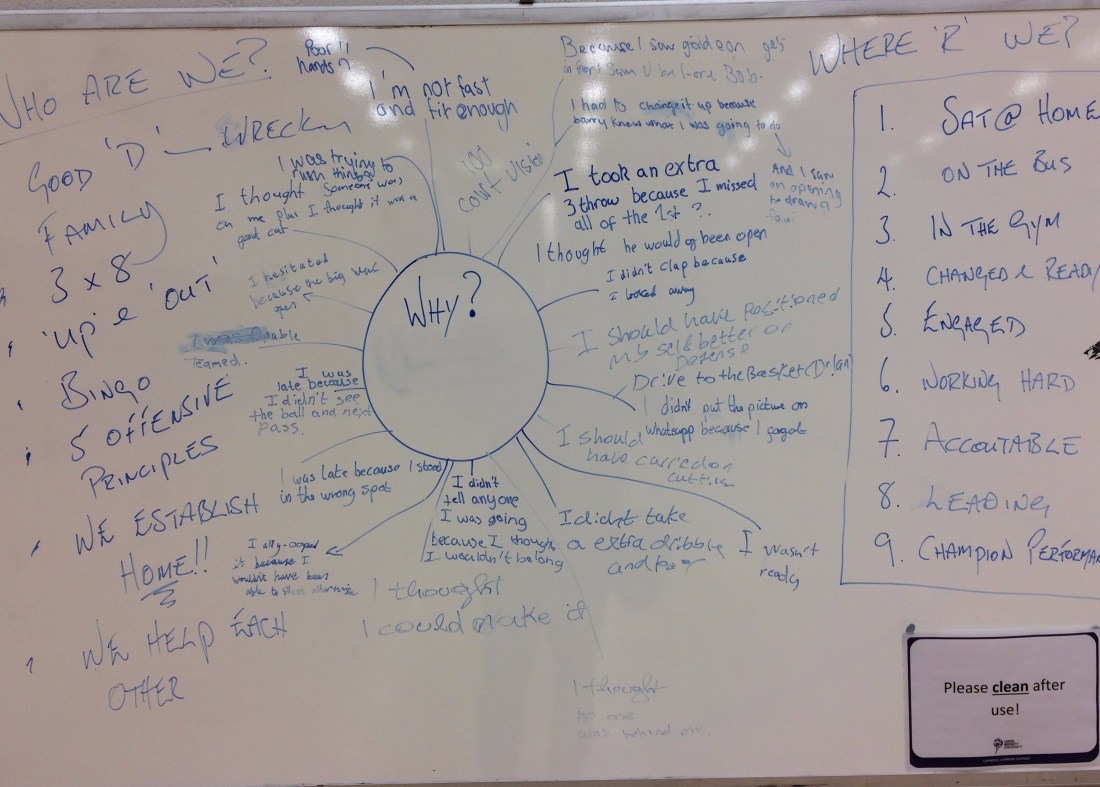
Looking back at the session, the boys worked hard, they made a tremendous effort to do something that perhaps didn’t come natural to them, to communicate in a leadership voice. To project a sense of confidence in their ability and to demonstrate their understanding of Who We Are. What it was I was asking them to do was far greater a task than I had considered. More importantly, how effective am I as a communicator? I would suggest that I have my moments but there is a great deal more I could and should be doing to improve the communication lines within our interaction. We sparingly utilise social media, mobile Apps and electronic mail to share ideas, focus in on a topic or area of interest. In addition, I have taken to utilising the white board as a means of providing pictorial / infographic type illustrations of key messages and working through our two key questions – ‘Who Are We? and Where Are We? But the point is, is it enough? Am I promoting, facilitating and presenting opportunities for players to be comfortable communicating with each other? Tonights session had left me wondering ‘where was I?’ Had I communicated enough? There wasn’t a buzz, a sensation that I get more often than not pre and post practice. I wasn’t communicating with self!

The drive home was somewhat empty, I don’t recall revisiting any part of the session. I wasn’t sure why, or even what it was specifically that had led me to this. Perhaps it was the lack of planning and so the feeling (or lack of) was due to not knowing what we had achieved? I arrived on the drive, left my car and climbed the stairs to my home office. Perhaps tonight was just one of those nights and all would be well tomorrow?

Five chairs – five choices

Having recently used the Five Chairs – Five Choices model within a seminar to highlight the concept of coaching styles (from a leadership perspective) I am mindful of some of the messages that emerge from the work of Louise Evans. The model addresses cultural intelligence, our ability as leaders / managers (and I suggest, coaches) to work effectively with people. Reflecting on my coaching practice, how I approach each individual relationship, each interaction and each moment often raisers the question of effectiveness. Do I move to a protective state where I assign blame, attack and defend my position as coach? Or, do I have vision in my practice, am I able to empathise and display compassion? I would suggest, like many others, that coaching does not reflect one single ‘style’ or mode of practice, rather, we move through a range of emotions, states of being and behaviours that have an impact on our charges. We have the power to influence their perception of the relationship we have and the effectiveness of the interaction as a result of the connectivity that exists within our being together.

Five Chairs:

(RED) Jackal – punish, judge, complain, attack, a judging position, I am right position

(YELLOW) Hedgehog – vulnerable, protective mode, self-judgement, self degradation self-doubt, lack of confidence

(GREEN) Meerkat – mindful, thoughtful, curiosity, choice

(BLUE) Dolphin (detect) – detective to ourself, self-awareness, vision, voice, create boundaries, retain power, freedom

(PURPLE) beautiful, difficult, loving, vision, empathy, compassion, understanding, listen

I often think through these and many other concepts as a means of informing my behaviour, the way I coach and the influence I have with my players. Today was very much one of those days. I spent a little bit of time prior to the start of the game talking to players individually. I wanted to empower them, give them a sense of confidence and ‘permission’ if you like, a license to play freely and do what they felt was an reflection of their very best. Having spoken to them individually, I took my place on the bench and did everything I possibly could to remain quiet, to allow the players to self-organise, to contribute through the execution of their role and to be supportive.

We got off to a good start, executing our now patented style of play, ‘Run-Press-Run’ (adapted from Coach Xavier, Nottingham Knights), sharing the basketball and communicating both the intent and purpose (at times). I sat quietly, using the opportunity to gather some stats, again, in the hope that I would be able to use them as a means of demonstrating Who We Are! The game continued to play out, the result was inevitable, however, I was more concerned with what we were doing and how we were doing it. My challenge had been a simple one, could we establish ‘Who Are We?’ Could we be US? It was important for all twelve players to get into the game and experience substantial minutes today, to act out their role and be who they wanted to be. With this in mind I said very little, accept for in the third quarter. The pressures, unpredictability and opposition really do direct our behaviour as a coach, something my research is beginning to tell me. I had my moment and then returned to my state of observation and recording.

At the conclusion of the game, our third gathering in three days, the boys had done well to explore their identity, to enact their individual and collective goals with a degree of success. Could we do better? Yes, sure we could, but for now, the effort (Where Are We?) had been good (engaged and leading) and we had shown that we did understand a lot of what and who we were trying to be. Of what our game model comprised of and how best to employ the various elements with success and energy. The boys had played well and I was happy with our direction of travel. We would continue to work towards our next challenge, a harder challenge, but one that I felt we were going to be ready for and that we would enjoy.


Friday night again

I haven’t yet gotten used to the idea of driving over to the University for a Friday night fixture, the roads aren’t the same, the traffic is different, it just all feels somewhat outside of my routine!

I arrived forty-five minutes before tip, the players were busy setting up the court, talking with each other and generally being self-organised. We were due to play our second team tonight, a concept that could be debated each way for a number of hours. I tried to stay away from the whether or not the appetite for such a concept was an healthy one or not and focus on demonstrating respect whilst trying to work through our game model. At this point, I should highlight that there are several teams between us and the second team in the league and so I had anticipated ‘A’ but gotten ‘B’.

They were all over us, we couldn’t make a pass, execute a dribble or even get into anything, we were sleep walking (not even in the gym yet) whilst they were engaged, moving and leading, 16 – 8! I was firm in my time out, addressing only two things, our levels of effort, which we should have been aware of as I had been asking ‘Where Are We?’ We clearly scored low on our scale of effort and it was showing. My second point was also a simple one, work together to find ‘us’, regain our identity (Who Are We?) and begin to play the way I know we can. I wrapped all of this up with a short sharp statement – Go find us!

The players exited the time out with a renewed sense of purpose, their levels of communication escalated, both on the court and on the bench, and we began to be us – running, defending, hustling and doing it together. I returned to my seat and continued to try and take stats whilst coach, not something I would normally do but then I was experimenting with a self-coaching approach to the game, allowing players to control our game model and direct our play on the court. I wanted to be able to give them a snap shot of Who We Are, a picture by numbers as a means of illustrating what we do. As a club, staffing was a difficult area of work, we couldn’t find volunteers to complete game stats for us and so had to do without. Hence, the decision to have ago myself and hopefully provide something the players could learn from.

We eventually got hold of the game and ran out winners, however, the taking of stats had served to change our approach somewhat, we had become aware of our individual performances, there was a selfishness that had crept into our play in a bid to take hold of the top scoring spot. I didn’t like it one bit, it was obvious and it was something I was going to have to address. For now though, we finished out the game, exchanged congratulations, as you do, and I made my way home. It would be a short turn-around and I would be back at LBU, back on the side line and back supporting these twelve players.

Where are we?

The drive over was a long one, hampered by the deteriorating weather conditions and societies inability to rationalise our response to some fluffy white stuff. It did however gave me time to think, to further plan in my head what it was practice should look like tonight. In an attempt to recreate the atmosphere of Monday night I had spent some time planning and considering how to shape practice in a manner that would empower the players, that would give them greater ownership of their individual learning spaces. I was going to employ the adapted Golden Circle model as a means of questioning and reflection, but I wanted to get more from the players, I wanted practice to belong to them.
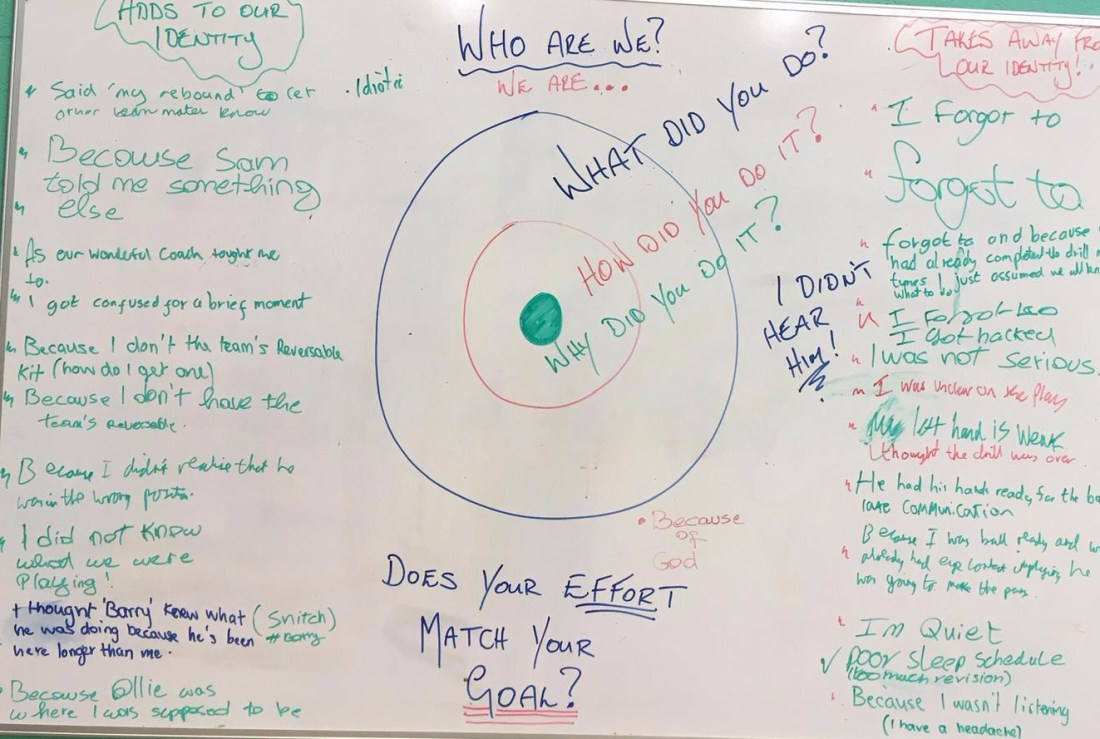
Having arrived in plenty of time, I spent five minutes revisiting ‘Who Are We?’. The players responded well to this, throwing their thoughts and ideas in the air, allowing me to catch and place them in the appropriate boxes. I then introduced a second question, Where Are We? The purpose being to allow players to express their levels of exertion and concentration. The concept was a reasonably well thought out one, unfortunately, I neglected to challenge the players throughout the remainder of the practice so will have to reintroduce the concept next week. For now, and in an attempt to regain the momentum of Monday, and further build on the concept, our questioning for the Golden Circle was driven by the players, they would hold each other to account, stop and challenge play in an attempt to better understand why. It was a slow start, they were a little quiet and reluctant to challenge. I gave a few examples, unpicking the affect of a behaviour and explaining how one role failure would have an impact on everything we did and on all of us.
The players moved through a series of game-based activities with enthusiasm, the energy levels began to rise and thereafter, remain high, with the conversation rising I tried not to say too much, a difficult task, but one that I was committed to achieving. I did however jump in to challenge one player, and a second said…”argh coach, I was just about to say that to him”. That moment, the exchange and the disappointed look on the players face told me everything I needed to know about my behaviour. I wasn’t giving them any time to achieve the task I had set for them. The players are smart, they have an opinion but quite often, through my practice, I found myself limiting their freedom to express their own thoughts and ideas. In that moment I tried harder, I committed to keeping my mouth shut and allowing the space to be filled with he voice of the players. They continued to work through some of the elements of our game model, challenging each other with regularity, and most important of all, have fun.
At the conclusion of our practice I stood and paused, it had been a good practice, not the ‘Magic Monday’ we had experienced just four days ago, but it had been productive in the sense that we were communicating with each other, challenging each other and holding each other to account. We had showed that we understood what it was we were trying to do (Who We Are) and made a number of attempts at executing some of the detail that would lead us to realising our model of who we were, and also, Where Are We?. As I walked out of the sports hall I could hear the shouts of the other coach, directing and politicking, I smiled to myself, it was a further reminded of the prominence of the coach voice and the need to try harder.

Note the day

Monday 28th January 2019 – I make specific reference to this date as I will remember it as a day of professional advancement within my coaching practice. As you would expect from my musings, it was a typical Monday evening practice, I had made the 90 mile journey from the East Midlands to Yorkshire following a day of teaching, a day that I had thoroughly enjoyed. I arrived at practice very early as I was due to cover a U14 session prior to my usual time with the U16’s. I spoke with the boys for all of five minutes, introducing myself, asking questions of them and painting a picture of where our next 60 minutes would go. Before I knew it the session was over, we had had so much fun, and hopefully, learnt something about the game. In short, I had asked questions, proposed a number of simple ideas and asked the boys to have a go at demonstrating them. We took this concept all the way through to a small sided game where I offered praise and minimal corrective feedback as a means of helping the players to shape their own experience.
Having concluded one session and moved straight into my regular time and space for the evening it was fair to conclude that I felt energised, ready to apply some of the fun and enjoyment gained from the U14 session into my time with the U16’s. We spent 10 minutes talking through ‘who we are’ and I introduced the ‘Golden Circle’. The model is a marketing tool, however, I felt I could repurpose the model to serve as a series of questions that we would ask ourselves within each moment of the game (practice). Essentially, the model would challenge the players to respond to three simple questions: What did I do? How did I do it? Why did I do it? The premise being that the ‘what’ is a low level inquiry, a question that would be easy to respond to. However, the ‘how’ and then the ‘why’ would present higher order thinking and an opportunity for the player to reflect on their movement, action or decision in that moment. To think beyond our surface activity and explore the rationale, purpose or meaning of what it was we had just completed. I would ask them the question following a action or decision, they would then have to work through the levels of reflection and document the ‘why’ on the board – one short sentence covering their thought process or driver to the action, decision or behaviour.
What followed was fantastic for us as a team, we demonstrated some real progress within our ability to communicate, to hold each other to account and to think beyond a low order set of processes. Players were laughing, asking each other ‘what’, which was our prompt to document the ‘why’ on the board, and most importantly of all for me, the level of communication, without even realising that we had altered our behaviour, went through the roof.
Practice continued in this vain and at a high level of intensity, it was great to be a part of the 90 minutes, to witness a visible improvement in their confidence, connectivity with each other and their overall enjoyment. We also managed to get through a great deal of content, visiting various concepts, sharing ideas, making one or two adjustments and generally being good team mates. An interesting byproduct to this climate of learning and fun was my overall mood. In fact, it is difficult to recall any real strong emotions in either direction. I felt somewhat free, light and unburdened by aims and objectives, by meeting expectations and achieving goals. What I saw in front of me pleased me no end, I saw collaboration, communication and an environment that offered support, friendship and possibly some learning. This would be the first time this year that the players had reached this level of intensity, this volume of communication and this degree of output, and all with a smile on their faces.
I drove home feeling as though I was the best coach / teacher on the planet, not something I would put my name to for a myriad of reasons, least of all because I believe that we are all a work in progress. This being said, the good feeling I was experiencing was as a result of my day of teaching and coaching, of sharing ideas, presenting opportunities to come together and exchange thinking in pursuit of a solution to the problem we shared. I drove home a happy coach/teacher, comfortable in my day’s contribution and with my role in the construction of these shared experiences. My only question to self was a simple one, how do I repeat such a day?

Happy in practice

It is a bold statement, one that I am not particularly comfortable making, but one that I am going to offer any way. Practice was good! It felt good, it looked good, it was well planned (two hours in the making) and we appeared to get a great deal out of it. I threw a considerable amount of information and direction at the players, lots of instruction, questioning and demonstration in a bid to get across two key concepts. I checked for understanding at every opportunity available and responded to questions with returning probes in a bid to deepen the players understanding of our offensive principles. Had I asked the players what they thought? No! My metric this evening was a very simple one, it just felt good.
I had spent some time over the previous week or so examining questioning and demonstration as valid behaviours within the profile of coaching practice. As such, I felt as though I was revisiting fundamental concepts and teaching myself all over again. I was mindful that in my own opinion of me, my coaching was acceptable in theory, I knew how to establish a climate of learning and challenge the players through questioning and play. Yet, the practice never quite measured up, it never seemed to look the way I had envisioned it would. For example, I couldn’t quite get the players to respond in a way that would demonstrate their understanding, after all, we only had a small number of simple concepts and approaches to the game, yet our presentation did not match the model in my minds eye. In short, I wanted us to run, we did that pretty well, unfortunately, we failed to get wide, to release the ball early enough to gain a true advantage, and to then make a good decision (all of the time). We did however get the ball to one side, a point we had emphasised all year long.
We would often be able to establish our strongside, but, the deciding factor to our success would rest with who caught the ball on the wing. At times our movement of the ball would be effective, we would be able to distribute possession and gain an advantage that we could both recognise and invest in. Other times, the ball would just ‘stick’, this would force players to ‘stand and watch’ and we would grind to a halt, gaining nothing from the possession.
This evenings practice demonstrated that we could be better, that we could be who we wanted us to be. In a short space of time we addressed a number of imbalances, we identified where it was that we were at our best and how we could feed that into our individual style of play. The players worked hard, they shared ideas, moved through the activities with enthusiasm and registered pretty high scores on the perceived levels of effort. Was our success this evening a result of a well-planned practice schedule? Or perhaps it was down to the effort and hard work of the players? If so, how do we repeat that effort and hard work? Was it a behavoural thing? What ever it was I wanted it again.
I drove home pretty happy with what we had managed to get through, I felt as though the content had provided the players with a degree of learning in a fun and non-threatening manner. That we had covertly covered more than we thought and had achieved a number of small successes within our play. The question now was a simple one, could, or rather, would this transfer into our style of play? Would we be able to demonstrate enough game awareness to be able to make in-competition decisions, communicate our intent and execute in the manner demonstrated for the last ninety minutes or so.

Friday night

Having listened to yet another Podcast, the content got me thinking about the role of the coach and coaching in general. The field is such a vast landscape of concepts and positions, occupied by experts from pedagogical, psychological and sociological positions that a glance in any reflective surface may present questions of ability and effectiveness to the best of us. The reasoning and sensibilities with which many refer to the practice are so far removed from my thinking and my historical journey to becoming and being that I often battled with the concept of being comfortable with being uncomfortable. In fact, in an attempt to be more comfortable I often sit and listen in an attempt to connect, to learn the language and to be accepted as a cultural member. The problem is,  much of what is said, demonstrated and reflected does not resonate with how I feel, the rationale behind my practice and where it is I wish to be. I am left contemplating whether or not a class differentiation exist within the epistemological chain that contributes to the ‘why’ of coaching and influences who we become. Is it that the club is closed or that I do not want to attend the meetings?
This evenings game was the first of two, and the very first of the season to be played on a Friday. The drive over felt different, our home court looked different (we had to play on a side court as opposed to our show court) and I was accompanied by my eldest granddaughter, all of which felt outside of my usual routine. This being said, and upon my arrival, the players were already into self-organising mode. They had set up the court, agreed their warm-up activities and were just on their way to get changed. It was with this view in front of me that I took a breath, smiled at my little princess and sat down to enjoy a few moments sharing my second world with my little girl.
Our opposition was unknown, a fact that left me further uncomfortable and unable to really prepare our next move, this being said, I had begun to settle into my ‘game day’ as it now looked. Was it club membership quality? Would I be recognised as being or becoming? Should I consume myself with a pursuit for answers? At that very moment I wasn’t thinking about my ability to perform a task, to bring together 16 young men and provide them with an equal measure of fun, learning and growth, an experience that would resonate with them for years to come. At the moment prior to the start of any game I ask myself, will I be enough today? Enough to recognise, to support, to promote and to encourage the very best of who each young person is and wishes to be.
The ball went up and in a short breath we were up 10-2, thanks to a lay up, 3-point shot, a trip to the free throw line and another lay-up. he sound of the whistle rang through the hall signalling a cry for help, the need for a moment to gather thoughts and to redesign the game strategy. We on the other hand, well, my exact words to the players as they came in for the first timeout of the game was simply – “what can I say, great job”. Not exactly the voice of a great wordsmith or even something that Hemingway or Twain would have been proud of. However, it felt as though it was all that was needed. In that moment they had been great, they had played their version of the game at their very best level and been successful doing it. The problem was, as so eloquently noted by Geoffrey Chaucer, “all good things come to an end” (1937).
My emotions were the tracks of the greatest roller coaster, I couldn’t level them out. I walked beyond site to gather myself, I expressed displeasure at our inability to ‘hold’ a degree of stability within our performance and to not be able to recognise the oppositions play. Suddenly, with a great swing and high velocity decent I would rise to considerable altitude, recognising the small gains, the effort and the determination in each and every one of the players. I was exhausted. Midway through the third quarter I called them in, I was firm, directive and resolute in my summation, an offering I am confident my lawyer brother would have been proud of. Unfortunately, I wasn’t sure, at that moment, just how effective my delivery was to my current audience.
Having finally emerged from the chaos victors, I swept my princess into my arms and left, I felt totally drained, confused by our play and disappointed in my game day preparation.