The short game

I spent a little more time than usual preparing for our game today, I had read Dave Brailsford approach to success, in particular, his marginal gains philosophy. I had spent a great deal of time working on what I thought the players needed to develop. What I had not contemplated was what I could do to improve our performance, beyond being mindful of my in-competition behaviours and their impact on the individual and team. I looked at our rotations, our warm-up, the bench environment, hydration and the general pre-game routine. There was a great deal I could change, and so I started with the rotations. I looked for equality of time, skill and position balance and continuity on the court and within our play (scorers, defenders, rebounders etc.). I documented it all on a pocket size card, packed my bag and made my way to the game.

The venue was about an hours drive and I had arrived in plenty of time. In fact I was one of the first there. I set our bench area up, sorted the water provision and rearranged the changing rooms. The players arrived in good time, shot around for a while and then began to get changed. I entered the changing rooms, spoke to them briefly about the game and discussed our three keys to success. I had also elected to confront the elephant from thursdays practice, I couldn’t leave it sitting and wanted to move on from it. I wasn’t sure that including it within our pre-game planning was wise, but I also didn’t feel that I could leave it unchallenged.

We entered the court with fifteen minutes to tip and began our warm-up. The players did a fantastic job of moving through a range of activities designed to engage them physically and mentally in elements of game model. I sat and observed and felt that we had put together a good pre-game period of preparation. I spoke to the officials, greeted the opposing coach and was ready. I felt good, we were in a good place, 3 and 1, about to tip against a team somewhat further down the table than us and our overall mood was relaxed, up-beat and focused. I was happy with where we were at that precise moment. I handed out my final instructions, I asked a question and provided some motivation before identifying the starters. They walked out on to the court, settled into their starting positions and we were off.

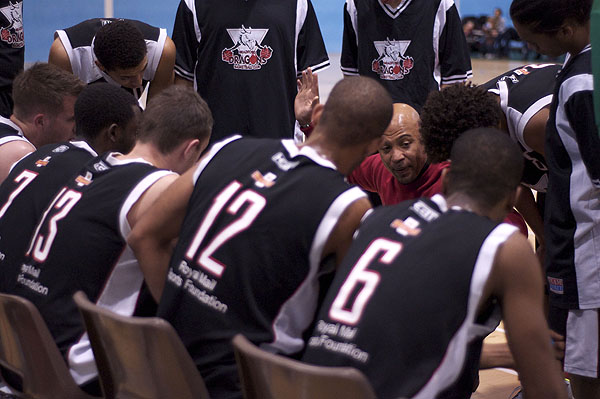
It wasn’t long before we were very much in a battle, not because the opposition was talented, but because we had allowed them to get comfortable. We sagged off of them on defence and allowed them room to shoot, we didn’t challenge any possession of the ball and our newly constructed rotations had us playing alongside different people. I found myself offering a great degree of instruction, challenges to what I perceived were poor moments of individual and collective play and generally ‘getting after the players’. I had gone from calm, prepared and happy to frustrated and perplexed within just a few minutes. I did my usual walk to the end of the bench in an attempt to shut myself up and allow them to play. Mixed in to our game play were a number of really good unselfish passes that resulted in a number of strong finishes around the basket. We just couldn’t match this play on defence.

I became increasingly aware of a great deal of complaining from the players, something that doesn’t normally occur. This was aligned to their inability to establish any form of athletic position or movement without slipping over. I had missed it completely, the players were not not playing any defence, they couldn’t for fear of slipping over. One by one players attempted to close out, ‘hit home’, rotate to the next player and before managing to do so, they found themselves on the floor. The court was an ice rink!! after a number of tumbles, and one particularly hard one, the referee stopped the game, we were up 20-18 and had begun to establish a degree of control over the game, but unfortunately, not on our movement patterns. The game was abandon and we walked ourselves back to the dressing rooms to get changed.

Driving home I felt somewhat frustrated by the events of the day. I had spent a large proportion of the morning getting myself ready for the game, unpicking a great deal of the game day activity and attempting to improve how we approached our game day preparation. I felt good at the point of tip-off, only for it to be cut short. We would have to do it all over again! Perhaps we could take a number of lessons from some of the good preparatory work conducted throughout today in a bid to repeat our pre-game mood for the remainder of our fixtures? Who knows, there may be a number of lessons from today that will serve us later on in the season? Game day was over, I turned the music up and continued my return drive home.
On time…

I arrived at my desk at 6.50am, determined to complete my day, plan my evening and get to practice on time. I loved the thought of teaching and coaching, of my professional identities being a reflection of the practice I love. I felt like a coach, attempted to dress like one, act like one and be one, it was who I was. The day before I had attended a Premier League football club in the north of the country to debate, discuss and share ideas surrounding psychological and physiological resilience. I introduced myself as coach and was treated accordingly throughout the day. As I enjoyed my status I considered the facilities around me, they were phenomenal, everything you could wish for in sport, the Academy and professional football club catered for everybody from an U9 team up to the first team.

Earlier, as I had walked into the facility, a roar of power had screamed out from the car park. I turned to exam what i was sure to be a high end car of some description. A Range Rover Sport sped through the narrow lines of the parking provision situated at the front of the venue. I had smiled to myself, if only. I had always dreamed of being a professional coach, of walking into a practice facility stuffed with everything needed to be the medias daily topic. I was however satisfied with my reality, I too was called coach.

I was one of the first to arrive at practice, hooray!! Not only was it possible but I had achieved it, it did take me 2 hours and 45 minutes but I had done it. I sat on the bench and watched the early attendees warm up, shoot the ball, attempt NBA style shots. I wanted to intervene, ask them how well they were utilising their access to the court. I didn’t, instead I pressed my lips firmly together. I wanted them to express themselves and if this was how they did, it was for them to decide. I sat on my hands and waited for the clock to strike 6.30pm. As the half hour struck I set them on their way, our first activity was very much about leadership, problem-solving and team work. I gave them distance and allowed them to unpick the movement patterns of our game model, discuss with each other how they saw the advantages avail themselves as a result of our movement and enjoy some small success as they journeyed to the basket.

The momentum continued to build as we moved through our practice unit, players were engaged, focused (to a degree) and I was ploughing through content, tweaking movements and generally enjoying our time together. It was however not to last, I had sought their attention in a moment of feedback and asked the players to hold the ball. I had to ask again, a position that frustrated me. We weren’t in school, this was an optional activity, why would you not want to be engaged? It didn’t stop there. I then had to ask the players to be in the moment as opposed to being somewhere else doing something other than engaging in basketball movement. I then had to ask again and lost all the composure, patients and calmness with which I attempt to approach our training sessions. For the first time in a very long time I excluded a player, withdrew from them and continued our practice with one less. It didn’t feel good, it wasn’t what I wanted but I also knew that I had to followthrough on my word.

We finished practice on a semi-high, there was now an ‘elephant’ in the room. I gathered my things, checked logistics for our upcoming east coast fixture and departed. I didn’t feel much like a coach now, it wasn’t as exciting as it was early, it now felt like an additional challenge that would need to be addressed. A faltering relationship where the lines of communication had broken down and needed repairing. As I weaved my way through the evening traffic, I tried to reconstruct our practice and pinpoint the moment where I could have done something different. There is always a moment, an opportunity when you are presented with two options, much like the platform scene in the 1998 movie ‘Sliding Doors’ (Gwyneth Paltrow), each with a very different outcome. Had I gotten on the wrong train?

The day after the day

I walked through the doors of the practice venue in my khaki chinos, shirt and jacket. Not what I would typically wear to practice, but then my practice plan looked somewhat different for tonight’s offering. Gathered in front of me were players and parents alike, at the behest of myself, to meet, greet and share our progress to-date, as well as explore any and all concerns, applauses and my philosophy as an aspiring coach. In other words, who coach Messam was and what we were hoping to construct over the course of our season. I had spent some time planning the evening, thinking of the potential questions and what my responses would be. However, the activity wasn’t new to me, I had played it out on a number of occasions and it had always served the team well.
I introduced myself, my ideas for the evening, and what I was hoping to get out of the activity. I then proceeded to share what the team had already constructed, our ‘keys to success’, expectations – player, coach and season, and how we felt as a group we would achieve our collective goals. Unfortunately I spoke more than I wished, I had hoped to listen, field ideas and hear what the wider stakeholder group had to say. All good plans and that…I wanted to shut up but I also felt the need to set the scene, present a little bit of our utopia, the vision for our season. The session did however gain some momentum and we started to ‘throw’ ideas around the room. The players voiced a number of opinions, when prompted, and the parents offered their perspective on what had currently passed and what they hoped for collectively. It felt good to listen, to hear what others felt, how they saw what we did and how they valued their child’s participation in what we were doing.
We spent a little bit of time ‘unpicking’ the weekends game, it was comforting to hear that it didn’t appear as bad from the spectator seating as I had framed it. Perhaps I was just being too hard on me? Perhaps not! We moved beyond the game and finished on a more positive note, it was good to talk, even better to listen and all in all the messages were clear and shared, we were doing the right things fort he boys in each and every moment we shared. I thanked everybody for their time, support and participation, we now had a collective, a stakeholder group that had shared who we are, what we do and how we wish to do it.
Following our mass gathering I took to hosting a number of 1 on 1 conversations in an attempt to assess the players individual motivations to-date, their goals for the season and to give them an opportunity to talk to me individually. The purpose was not to profile the players or indeed offer them feedback on their performance to-date, rather to listen, to agree their role and share any thoughts that emerged as a result of our earlier meeting. Whilst I conducted these individual sessions, the rest of the players engaged in self-directed practice. I had asked the captain to run the session and to focus on shooting. A second player suggested that the warm up should resemble the game day activity. Great idea, I was happy to agree. The players set about coaching their collective movement and I set up stall in the corridor of our practice venue.
Following the conclusion of the four individual sessions I re-entered the sports hall to observe the team competing in a conditioned game against the second team. This activity had not been factored in to my planning for the year, however, it had served us well, it was a great confidence builder and an opportunity for the players to see the game from the coach’s chair, to to read plays, observe our mistakes and learn from our success, it really did serve us well. As I entered the court the noise level was high, I could hear and see feedback, instruction, correction and praise. The boys appeared to be fully immersed in their practice, motivated and enthused with purpose. I smiled, today was a good day, today had been a successful coaching day.

Top of the table clash

I couldn’t have been anymore disappointed in both the ‘I’ and ‘Me’ that looked back at my coach self in the rear view mirror. I had asked the players to run with passion and the freedom of a gazelle and they did. We had talked about selfless ball movement and allowing each player the chance to be their very best self, and without question the expressions of movement that emanated from the court said just that. And in our early gatherings we agreed who we wanted to be, how we would define success and failure and how the space in between all of this would be the metric for our individual growth. All of this we did, unbridled, unafraid and unashamed and yet I questioned, I challenged and I demanded more without an hint of negotiation, debate or consensus. I actually felt angry with myself!
It didn’t start out the way it ended though, we looked great in the early going, our ball movement was fluid and we got good looks from all over the floor, open jump shots, lay ups, penetration and kick-outs to wide open players, and all from ball movement, ball reversal and smart decision making. In fact, other than applaud their play and execution, and the odd ‘punch’ into the air, I said very little, I didn’t need to, the players were saying it all with their play. It was a pleasure to watch and an even greater pleasure to be involved in. I high-fived players on the bench, noted examples of exemplar play and generally showed my happiness at our level of intensity, style of play and overall approach to the game. As a result of this great demonstration of what we could be and after just a handful possessions, we were up 9 – 0, built on a lay-up, a jump shot, a 3pt shot and a trip to the foul line, you just couldn’t have scripted it any better. I could feel the nervous energy running through me, battling to construct our game strategy, our direction for the remainder of the game.
Through out the second and third quarter we had a number of ‘breakdowns’, moments where it didn’t go our way, player disagreements, wandering attentions due to limited playing time and general frustration at the physicality and opposing force of our competition. However, instead of combating the onslaught I started to engage a little, the volume of concurrent feedback was on the up, stern challenges left my mouth with purpose and intent and I quickly began to lose sight of the ‘me’ I wished standing on the sideline. I was worried about the ‘breakdowns’, I had anticipated one or two as a result of the level of competition we were facing, but actually it was me that was drifting away from the game model, my values and our collective agreement. I tried to take a minute, compose my thoughts, navigate my way through the now messy reality that faced me in the hope of finding a somewhat more stable position, a place that I could begin to re-establish our norms. It wasn’t to be, I was like a misfiring car with the promise of turning over but never quite getting there.
The mood on the bench was new, like an uninvited guest it forced its way in, got comfortable and began to annoy everyone around it. Players were visibly breaking downing, assigning blame, lowering their head and generally presenting an alternative them. Yet, among all that I thought was wrong, could go wrong and was wrong, with just 90-seconds remaining and possession of the ball securely with us, the score said something completely different, we were down just five points. A chance, another opportunity had been presented to us to claw back who we wished to be. I began to feel a degree of positivity move through me, I was encouraging and passionate about our chances, when suddenly they were gone, just as quickly as they had emerged. One turnover, two…three turnovers, a disagreement and two made baskets by the opposition and time had ran out on our top-of-the-table clash. I congratulated all concerned, spent a minute telling the players that we did well for the majority of the game and that we just needed to learn to finish the game under pressure. We gave the opposition a ‘call’, reminded us who we were and then I was gone. The slow long walk to the car and to the dissection of what had just passed before me.

Thursday again…

Late again! I couldn’t be anymore frustrated with the current arrangements for our Thursday practice session. I finish my teaching at 4.30pm and then have to make the 78 mile journey in rush hour traffic, at both ends, to start practice at 6.30pm. I couldn’t do it, not in a Ferrari and with a willingness to drive faster than I already do, I just couldn’t, not even if I tried harder. The truth of the matter was, of course, that nobody was to blame. We had lost our training venue and as a result have been occupying a temporary time slot at a central venue, and wouldn’t you know it, the only available time slot was 6.30pm. I had said I wouldn’t be late, but I am late every Thursday at the minute! What was the impact of this? Did it have a negative influence on available practice time? The way the players engaged in our Thursday practice unit in my absence? I didn’t know but then I didn’t want to be late!
Having arrived late I was pleased to see some structure to the practice. The boys were engaged in a conditioned game, there was some discussion and evidence of some effort to meet our game model. I apologised, asked a couple of questions and then allowed them to play a little longer before getting into some other stuff I had planned. The players were responsive, understanding and appeared okay with my now regular punctuality issue. I stood and watched them practice for a while, slowly regaining my composure, removing my 145 minute drive from my shoulders, I entered the room and began to look forward to the weekends game.
Practice flew by, we got into a number of different activities, structured to promote decision making and problem-solving, and which led to a number of small successes. Players were talking to one another, directing, explaining why they did what they did, and most importantly of all, they appeared to be having fun. We came together, shared a few logistical details regarding our upcoming fixture, and then just like that it was all over. The drive home allowed me time to think about time, the lack of, the effective use of and the need for more. Was it poor planning on my part, an unfortunate predicament or just what it was? It wasn’t long before I was home and busily moving around my home office preparing for work the next day…clearly I had ran out of time, again!

Coaching patience

Sitting and watching the session before mine had become a common undertaking within my weekly coach duties, and something that I gleaned a great deal from. It gave me the opportunity to explore my own practice through the actions and behaviours of others, almost a series of prompts from which I could begin the almost hourly critique of what I labelled coaching practice. My floor positioning, voice projection, degrees of interaction, language and terminology had all surfaced within my consciousness and I was now acutely aware of my delivery, for good and for bad.
Monday practice was a shared affair, court, time and purpose and I used the opportunity to promote intensity, concentration and focus. To this end, I employed a form of chaos theory to my session design, randomly ‘throwing’ lots of information, challenges and targets at the players and then standing back and observing how they solved the various problems within the set tasks and the scenarios presented to them. We got off to a good start, the energy was high and I could hear a great deal of politicking, collaboration and general directives being shared. The aesthetics were not great, it looked unorganised, almost messy, but in among the chatter there was a distinct sense of ownership. It suddenly dawned on me, the players were actually engaged in problem solving and decision-making and had been for some time now. What was missing was my acknowledgement of the fact, in part because I didn’t recognise their efforts earlier, but more so because it didn’t necessarily look like how I would have expected it to. At that moment I committed to exercising a little more patience, to allow the players to be who they were and for the their learning to emerge at their pace.
Due to the limited space and shared provision of this particular practice unit, we would utilise the last thirty minutes of practice to play against the second team. As always I assigned a player-coach to each of the two fives I had and then allowed them to do what they thought was best for our game model. The only parameters set were that they had to be able to rationalise their approach, that they must hold each other to account on our ‘keys to success’ (establish ‘Home’, guard the ball, rebound & run) and these must be done under our defensive and offensive principles. I set 4-minutes on the clock and granted possession to the second five.
Much like our practice, the game appeared chaotic, lots of over dribbling by some, our movement wasn’t at all sharp and we didn’t defend the ball particularly well. This being said, what we did manage to achieve was legitimate attempts at all of what we had agreed. We pushed the ball (strongside), made one or two early movements from our set pieces (although our timing was out), and most importantly, we held each other to account. What played out before me was a reflection of our approach to practice, we were attempting to execute our game model and I just needed to apply more patience to my assessment. I needed to actually allow the players to work through the problems, to make mistakes and to recognise that they are not always going to look and move in straight lines, that it won’t always look the way I believe it perhaps should, as constructed within my minds eye. I still held reservations, I still wanted a greater deal of ‘sharpness’ to our movement, but I held myself back. I refrained from correcting, offering an opinion that was my own or indeed condemning their efforts. Instead, seeking to get them to think, I posed a number of questions and allowed them time to talk amongst themselves.

We finished out our practice, grabbed our belongings and made our way to the door. I talked to one or two of the players as we walked across the carpark, their mood seemed positively upbeat. If this was to be taken as a sign of their contentment at the session content and their learning I was happy to accept it. I got into my car feeling good, my initial feedback to self was good session.

The cost of winning

Having picked them up and made a number of left and right turns we were on the motorway heading north and they were fast asleep, an opportunity lost to share a laugh and get to know some of them better. It wasn’t that I didn’t know them, but there was room to improve, to extend the depth of our relationship and to better understand each of them as individuals. The drive up was a long and quiet one, this would be our first real test, a team that we knew would be competitive, tough and difficult to beat.

I let the players direct their warm up having assigned a number of individual tasks to the team captains. “Why did it take so long for them to organise themselves?” Eventually they got into a shooting drill, okay, I wouldn’t have started there but if they are comfortable with it I will let them continue. The warm up was twenty minutes of shooting and a few dynamic stretches, not what I would consider appropriate as a means of igniting the large muscle groups, engaging the brain in focus and thought processes relevant to the task ahead and/or generally getting the players prepared. I wasn’t however going to say anything and managed to keep my word. I called them in, highlighted our three keys to the game and offered some words of encouragement as the horn sounded for the start of our forty minute competition.

The opposition scored the first points, we responded and then they scored again, this wasn’t going to be an easy forty minutes. I smiled, told the players’ behind me that we were okay, turned to the court and extended the same sentiment to the in-game players’, gesturing for them to relax, calm down and get into our ‘stuff’. As the game progressed however, I would not offer the same calming influence, I found myself correcting movement, directing player decisions and challenging players before retreating to a quiet moment, a moment to reflect on what I was doing. I was very aware of my inner thoughts and feelings, feelings of frustration at our inaccurate passing yet pleased with the effort. It was difficult to manage, I was in the midst of an outer body experience, trying to calm myself, to allow the players to examine their own play (something that they were doing pretty well). I walked down the bench and away from any immediate contact and had a personal  time out, we were down two points, we were not playing our best and yet we were right in the game. Suddenly we managed a sequence of stopping them, scoring and then stopping them again, we were down just two points and the first quarter had come to an end.

I let them talk amongst themselves for 15-seconds while I just kneeled in front of the bench and smiled, I then smiled at them. I had managed to find an inner calm and I wanted to share it with the players. “We have turned the ball over, missed eight free throws and are only down two points.” I continued to smile and talk in a soft soothing voice. “Guys, we are okay, we have now settled into the game, we are running the ball very well, getting to the line, challenging the defence to commit to guarding us and forcing them to make mistakes, we are okay.” We came together for a strong rally call, I believe I even shared a light hearted moment in the form of a joke and the players walked back to the court. I could hear them offering words of encouragement, statements of intent and there was a general positivity about their mood.

The second period was a tight affair, in fact it was dead even at 17-points a piece for each team. We struck and then they hit back, we would make a mistake and then they would. I tried to rotate players and keep a balance without losing anything (not something I had articulated to the players but now felt as though I would need to – there was so many things that I continued to think of that needed sharing with the players’). I was up and down, there were a few ‘what are you doing’ questions, quickly followed by some attempt to reframe and offer some opportunity for learning and confidence building. In short, I felt as though I was all over the place, one minute in control, the next minute, very much out of control. In the final seconds of the quarter I found myself directing traffic, the score was tied and they had 7-seconds to score. My efforts failed and the players walked back towards me from the court down two points having conceded the final basket of the half.

In a moment of calmness I once more turned to the players, highlighted the great work we had accomplished in the first half (rebounding, transition offensive and guarding the ball) as well as the fact that we had missed 10 of 12 free throw attempts and that we were only down two points. The mood was light, the players, most of them, seemed relaxed, albeit frustrated with their own level of play, the score and the very tight whistle being exacted on the game.

We started the third quarter with a flurry of strong moves to the basket and strong defensive possessions. We had turned a two point deficit into a five point lead (including going 0-4 from the free throw line). The hooter sounded and the official called timeout to the opposing team. The players walked over to the bench, their mood was somewhat more upbeat, jovial and confident. I applauded their effort, their execution and their togetherness. I then explained that we needed to be more like this regardless of the score – possibly a lesson for me as much as for them. As they walked back to the court following the minute break I felt a sense of pleasure, without knowing it they had demonstrated some resilience, they had fought through a difficult period of play, shown some real togetherness and, more importantly for me, had made a number of decisions that they were very much in charge of and aware of. I felt somewhat more relaxed.

We outscored the opposition 27-18 in the second half (including going 1 out of 8 from the free throw line in the half), we had managed to ‘weather the storm’ and really ‘fight’. At times our execution was poor, we didn’t defend the ball as well as we wanted to and we went away from some of our offensive and defensive principles. This being said, there were times when we executed very well, we would hit ‘strongside’, attack or move the ball and get something good going to the basket. We rebounded, and challenged for every rebound at both ends of the floor and managed to guard the ball and force them to change what they wanted to do. The final buzzer went and we had managed to travel the seventy-three miles north, play forty minutes of tough basketball and secure our third win. There were however some ‘holes’, some things that we would need to ‘fix’ and quickly – some of the players and parents were discontent with the allocation of playing time, frustrated at teammates play, ‘holding of the ball’ and other minor thoughts that detracted from a team ethos.

I walked out to the car park, congratulating all of the players’ as I passed them, wishing then a safe journey home. My three charges climbed into the car, battling for front seat occupancy and the right to comfort. We exchanged five or six minutes of chatter before silence fell once more on the journey.

And then there were six

The players had started without me, a sign that once again I was late, yet a positive indication of where we were in terms of our development. They were talking, sharing ideas and moving through some of what we had worked on. I called them in and began my apology, “traffic was heavy, I didn’t finish teaching until 4.30 blah blah blah…..” During the off-season I had said that my practice sessions needed start as late as possible to allow for my extended commute but due to venue availability etc. here I was, practice six and late again.

We quickly moved on and got into some stuff, 3-man shooting drill, BLOB 5v0 walk through and some free throws, most definitely random in form. The tempo was high, the effort evident but the detail was far from accurate, I called them in, again. “What is your focus point prior to receipt of the ball?” The return was a splattering of responses, ideas and suggestions. Was it a well formed question? I wasn’t sure, I had taken to structuring my questions with a great deal of thought behind them, may be it was. I tilted my head and smiled as they moved back out to their respective places on the floor. The energy increased, they began to narrate their movement (that is what we are calling it from now on – it began at the last practice and was a small success for our advancement of communication in a leadership voice) and there was a sense that practice belonged to the players.

We had a new addition to the squad, I didn’t say a great deal to him, other then to welcome him and check he was okay. His response was an inquiry into when he would get to play. I directed him to the Team Manager and continued to move through our practice, posing short recall-based (convergent) questions – “at what point are you open?” “Are you continuing to move?” The interaction had a different feel to it, the responses were plentiful and evidence of the players engagement in some thinking. I was however mindful that our new addition had no way of knowing exactly what was going on. I committed to going over to speak to him and as I turned the need was no longer there, one of the players had their hand on his shoulder and was directing movement, sharing their interpretation of the task, and generally being of some help and support to our addition.

Throughout the practice I found myself attempting to be somewhat more patient with the players, to allow the chaos to run free as oppose to demanding systemic movement and order, a difficult task I can tell you.  For example, coming out of a time out (this is what we call out water breaks) I had asked the players to run ‘strongside’ wing (our fastbreak movement) in a 5v0 format into ‘UP’ (our floppy action) in a 5v5 conditioned game. There was collective and individual conversations, politicking and general debate spread across the floor. I so desperately wanted to shout for them to hurry and get to their ‘spots’, to begin the task. But I didn’t, instead I said nothing, it cost me the tip of my tongue (almost!) but I said nothing, I stood patiently and observed the organised chaos. I guess if our view point was pedagogically framed we would refer to this moment as a constructivist approach to learning, social interaction, the sharing of ideas and the solving of problems as a collective. The question is, do we label this coaching? Certainly not if your stance in traditional, coach-centred and instructional in nature. A few hours early I had conversed with a colleague on the difficulties of employing game sense to my practice. Not because I craved control, but because the visual was a difficult one to digest. I think patience and the picture that is presented as a result of the shift in approach is very different, and one that takes some getting used to.

I set our final activity up, offering some instruction before allowing them to explore for themselves. It didn’t last long and I called them in again. “What are we in? What is our focus? Where should you be?” It was more than apparent that I had forsaken all that I set out to do and reverted to challenging their thoughts and actions, or was it? Perhaps there needed to be a blend, some instructional-based dialogue supported by questioning and time for the players to digest, to think and to action their thoughts? We concluded our time together, exchanged appreciation for the contributions to the session and I departed. Practice had been positive this week, my planning, particularly the design and anticipation of answers to my questions needed to improve further, as did my punctuality, but overall I entered my car happy and content at our collective efforts this week.


The morning after…

It wasn’t much longer than twenty-four hours before I was to see my chargers again, a rare occurrence in my practice as we do not sit under an Academy banner or private school provision. At best I see them twice a week, that is as long as they do not have revision, family commitments or alternative sporting obligations. Practice numbers were often a fluid entity, one that was accepted based on the nature of our coming together and the make up of the club. All this aside, I was still excited, they had worked so very hard and I wanted to use the momentum to fuel our next gathering and to inject our practice session.

As the clock struck thirty past the hour I began to share my reflections with the team, I spoke of effort, unselfish ball movement and execution. I applauded their willingness to explore our various concepts throughout the game as well as their successes in other areas, notably rebounding. I asked for comments from the players, an opportunity to further reflect on our previous performance. The response was light but that was okay, I knew they knew what they had achieved.

Our first activity was a player directed walk-through, players sharing their ideas about each of our designated patterns on offence. We spent eight or nine minutes and I did very little more than lead the cheering and offer the odd comment or correction, but only when asked. The mood was positively confident, it was clear that they had moved to a new identity, a new way of feeling about themselves as a collective and it was exciting. I was determined to hold on to this feeling, to develop their confidence further and allow them the voice they deserved.

With my intentions set we marched through situation after situation, the tempo remained high, the effort and intensity scored well and I felt good, but more importantly I believed the players felt good about themselves and each other. My feelings were not because we had won, nor because we were seemingly having a good practice, but because I wasn’t doing a great deal. A somewhat strange thing to say I know, but the players were talking, sharing ideas, problem-solving and they didn’t even realise it. It was my vision of a learning environment, a place where they sought opinions and shared positions with confidence. It did however make me reflect on our previous session, my request, which wasn’t far from a demand for the players to start to think for themselves. My approach was all wrong, I had to exercise some patients, allow them to find their way. I guess I was struggling with this as we often have so little time and I want to push on, which in itself is fundamentally wrong, athlete-centred does not include ‘I’, rather ‘them’ and ‘we’.

A notable moment…communication is an area that I am really trying to develop within the players, talking, in a leadership voice, to one another, supporting, directing, organising through dialogue as a means of learning and constructing a shared understanding of their play. During our early activities I suddenly asked them to narrate their movement, to verbalise what they were doing. The results were stunning, not complete saturation but a large proportion of the players were talking through their movement patterns and sharing their intentions. I hadn’t thought of the approach before, it certainly wasn’t something I had detailed in my planning. I was observing the players and had noticed how quiet some of them seemed when it suddenly came out of my mouth, isn’t it strange how some of the best ideas require little thought and planning?

We finished our practice with a scrimmage against our second unit of U16 boys, I applied some conditions to the game format but allowed the players to coach and direct themselves. The commentary from the bench was again pleasing, “who’s got home”, “run something”, “what are we in”, all questions that I would have asked myself had I not been trying to allow them to think without my commentary or instruction. We made one or two mistakes and our play in the last few minutes was perhaps not where we would have wanted it to be. I called them in but then failed to finish in the way I know I should have done. Instead of asking them how it went, how they would measure our performance and what key messages we could take away from the activity, I proceeded to tell, I told them we had to do better. Was it that the rattling of the caretakers keys had rushed me and I needed to conclude my session or was it that once again I had fallen foul of my default state, that of the traditional practitioner.

As I walked to my car, hands full, I searched for my keys…would you believe it, I had left my jacket in the gym and the caretaker had locked the building! I looked up to see him stood at the gate to the school, poised to wrap the chains around the cast iron barrier between work and home, the signal was clear, it was the end of his day. I now had to go cap in hand to the guardian of our practice time and employ him to delay his trip home, to ask him to open the door he couldn’t wait to close and to allow me to retrieve my jacket, if only I had taken the time to think…

Sunday best: Game two…

I left the house with plenty of time, tip was 10.30am and I had but a twenty minute drive, if that, from door to court. Game day brings out the very best mood in me, I enjoy the thrill, the complexity of the unknown and as such approach competition with a joyful spring in my step. Everybody was changed and warming up with twenty-five minutes to go, there was a sense of organisation about what we were doing and it was good to see. I had already made my mind up that I wasn’t going to revisit our last practice, I needed to move on. I spoke individually with a number of players, shared smiles and the odd joke as we continued to prepare ourselves, the mood was light and playful. Our pre-game talk was short, I didn’t want to overburden them, we focused our attention on five ‘keys to the game’, of which communication and togetherness featured centrally within the game narrative.

The ball went up and we gave up a basket, and then a second very quickly. I wasn’t worried, concerned that we had missed two basic assignments, yes, but I was determined to not get on the players early and let the game evolve, their game, their ideas and their ability to correct in-game mistakes. As we moved deep into the first quarter it was clear that we had two things on our mind, get the ball to a wing, establish a ‘strong side’ and attack, and defend ‘home’ We did both with vigour and effort, and we challenged each other when we failed to meet the goal. Players were thinking, moving and communicating with each other, it was really pleasing to see. As the quarter came to an end we had managed to amass an eight point lead, mostly off of the back of lay ups and short jump shots. Emotions were high on the bench, players were talking, challenging and generally pleased with their effort. I acknowledged the great start that we had made and applauded our rebounding. In fact, our rebounding was a significant plus for us and something that I did not expect.

Throughout the next two quarters I began to talk more, challenge, instruct and offer my opinion, I wasn’t pleased with my behaviour but I was very aware of it and kept taking small personal time outs to control my thoughts and reduce my instruction. Other than the odd mistake I had no need to get after the players, they were doing a good job of trying to move through the things that we had agreed were key for us. Tactically, I made a number of small alterations to our out-of-bounds action, we were getting a great deal out of the baseline stuff and I wanted to see if we could execute from the side line. I gave them a couple of options out of one play and they proceeded to execute with familiarity, confidence and accuracy. It was great to see them take a task and solve the problem between themselves. The question I now find myself wrapped up in was why? Why had it all of a sudden come together?

The final quarter saw us give up the most amount of points (10), I was unsure whether this was down to our defence or their offence but we finished the game holding the opposition to just 33 points. We had established and maintained ‘home’ throughout the game. We had guarded the ball very well (WRECKING – on ball conditions for defence) and had helped out, not all of the time, but most of the time. All of this and I was still challenging plays, identifying missed assignments (movement, weak side rotation, missed reads etc.). To say it is a challenge to develop independent thinking athletes is somewhat of an understatement. They had done all that we had prepared for, not always to perfection, but they were making the effort, learning from their mistakes for the most part and applying as much effort as they could.

My take away from the game is that I must consider a more blended approach, players are going to have to make decisions, communicate and problem solve within our Game Model. However, I had to allow them to do so, I have promoted the approach, encouraged and challenged them to lead with a ‘Leadership Voice’, but then have spoken over them for 30 minutes. The drive home was a pleasing one, tarnished only by my broken iPad, a clumsy moment that resulted in me dropping the device and smashing the screen. I believe the saying goes, basketball giveth and then taketh away…